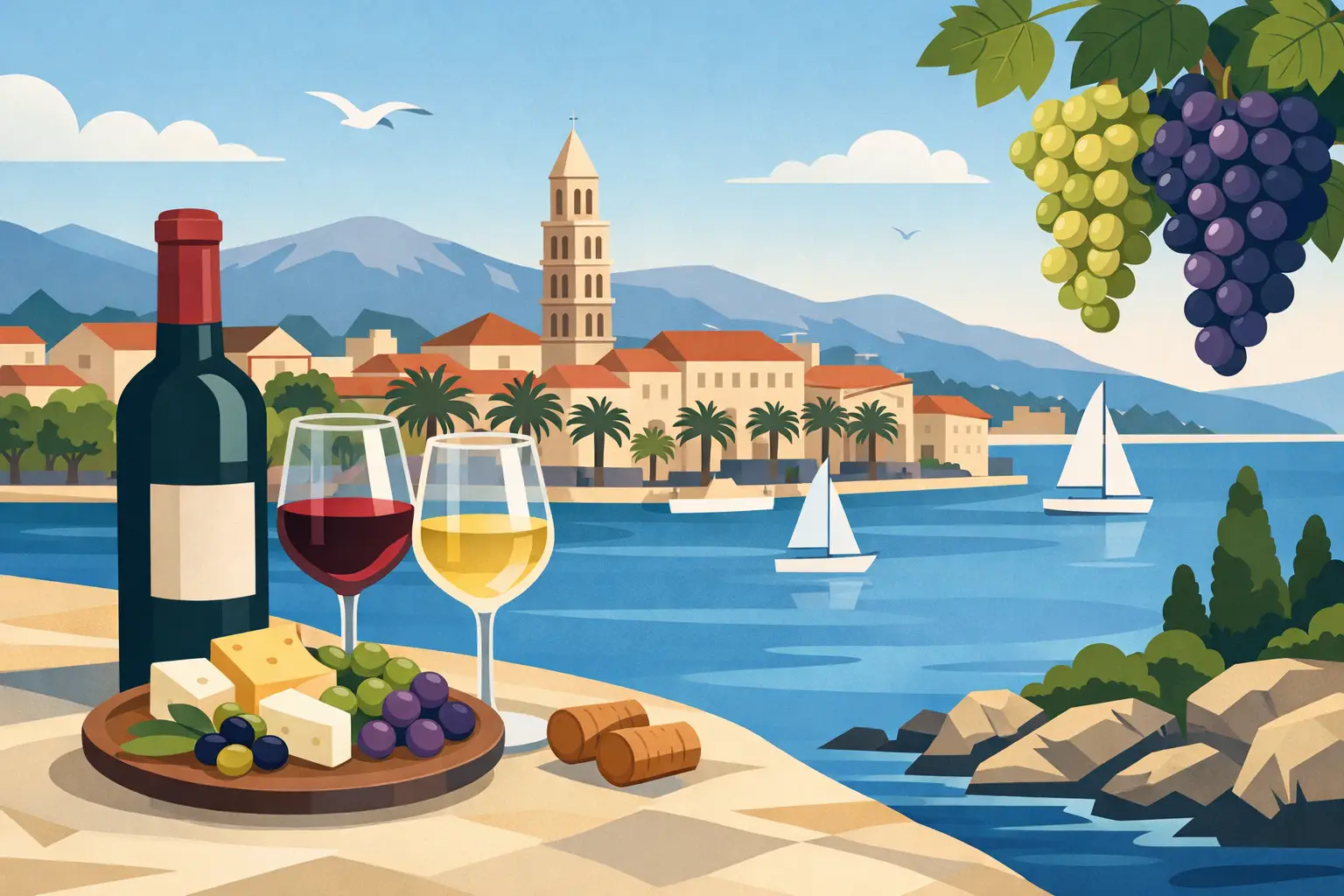
The first sip should come after the sun softens over Split’s stone facades, when the sea air carries through the old streets and dinner still feels full of possibility. A Dalmatian wine tasting is not simply a lesson in grape varieties. It is an introduction to a landscape shaped by limestone, salt, intense summer light, and generations of patient growers who understand exactly what their vineyards can give.
For guests staying in Split, wine is one of the most rewarding ways to move beyond the familiar Adriatic postcard. A thoughtful tasting can fit elegantly between an afternoon in Diocletian’s Palace and a late dinner, or become the starting point for a private journey toward the islands and the Pelješac Peninsula. The best choice depends on whether you want a polished city experience, a vineyard visit, or a long, unhurried table where each glass arrives with something from the local market.
What Makes Dalmatian Wine Distinctive?
Dalmatia is not a single wine style. Its vineyards stretch from the rocky islands to the slopes above the coast and the warmer southern reaches of the mainland. What connects them is a demanding Mediterranean environment: bright sun, sparse soils, steady winds, and the cooling influence of the Adriatic.
The results are often vivid and characterful. White wines can be saline, herbal, and mineral-driven, with enough texture to stand beside seafood and olive oil-rich dishes. Red wines tend toward ripe dark fruit, dried Mediterranean herbs, warm spice, and firm structure. They are wines with presence, though the finest examples retain freshness rather than simply relying on power.
This is why a good tasting should not rush through a checklist of labels. The most memorable hosts explain where a wine comes from, how the vineyard faces the sun, and why a grape behaves differently on an island than it does across the water on the mainland. A glass becomes far more expressive when its setting is part of the conversation.
The Essential Wines to Taste in Dalmatia
Pošip: A White With Adriatic Character
Pošip is among the region’s most celebrated white grapes, especially associated with Korčula. At its best, it offers citrus, stone fruit, wild herbs, and a lightly salty finish that seems made for an Adriatic table. Some versions are crisp and direct; others spend time on lees or in oak, gaining a richer, creamier profile.
Taste Pošip first when possible. Its brightness prepares the palate, particularly if the tasting includes oysters, white fish, shrimp, or delicate local cheeses. For a warm evening in Split, it is also one of the most versatile choices by the glass.
Grk: Rare, Dry, and Worth Seeking Out
Grk is a more elusive white, grown most famously around the village of Lumbarda on Korčula. It is typically dry and textural, often bringing citrus peel, almond, herbs, and a distinctive mineral edge. It may be less immediately familiar than Pošip, but that is exactly its appeal.
A tasting that includes Grk offers a glimpse of Dalmatia’s more singular side. Availability can be limited, and styles vary, so ask the host what vintage is being poured and how it was made. This is a wine to approach with attention rather than expectation.
Plavac Mali: Dalmatia’s Signature Red
Plavac Mali is the red wine many travelers encounter first, and for good reason. It is the defining grape of southern Dalmatia, closely linked to historic places such as Dingač and Postup on the Pelješac Peninsula. Expect black cherry, plum, dried fig, rosemary, pepper, and sometimes notes of chocolate or tobacco.
Plavac Mali can be generous and full-bodied, especially from warmer, sun-exposed sites. Yet a refined bottle should also show balance: acidity to lift the fruit, tannin to frame it, and enough restraint to complement food. If you usually prefer bold California Cabernet or Southern Rhône reds, this is an especially satisfying place to begin.
Babić and Tribidrag: Two More Reasons to Look Further
Babić, most closely associated with the Šibenik area, often delivers a darker, more savory expression, with blackberry, earth, and herbal notes. It can be excellent alongside lamb, beef, or aged cheese. Tribidrag, known internationally through its relationship to Zinfandel and Primitivo, has deep Croatian roots and brings ripe berry fruit with an inviting, sun-warmed personality.
Neither needs to appear in every tasting. But when a sommelier includes one of them, it signals a welcome effort to show the diversity behind the broader idea of Dalmatian wine.
How to Plan a Dalmatian Wine Tasting in Split
Split offers several ways to taste well, and each creates a different kind of evening. A guided tasting in the city is ideal for a short stay, particularly when you want to compare regions without dedicating a full day to travel. Look for a format with small pours, a clear explanation of the producers, and food chosen to support the wine rather than distract from it.
For a more immersive experience, a private excursion can bring you closer to the source. Pelješac is renowned for serious Plavac Mali and rewards travelers who have time for a longer coastal drive. The islands offer their own appeal, especially Korčula for Pošip and Grk, although ferry schedules and seasonal timing deserve consideration. A vineyard day feels wonderfully leisurely, but it is not always the most practical choice for a two-night city break.
A concierge can make the difference between a pleasant tasting and a well-paced experience. At Palazzo President, arrangements can be tailored around dinner reservations, private transfers, and the rhythm of your stay, leaving you free to enjoy the wines without watching the clock or navigating unfamiliar roads after a generous pour.
Pair the Wines With the Table, Not Just the Tasting Card
Dalmatian wine comes alive with food. A cool, mineral white beside oysters, sea bass, or grilled calamari makes immediate sense, but it also deserves a place beside risotto, fresh goat cheese, and vegetables dressed simply with olive oil. Pošip with black risotto is a particularly rewarding pairing, as the wine’s citrus and herbal notes cut through the dish’s richness.
Plavac Mali calls for more depth. Think slow-cooked beef, lamb prepared under a peka bell, grilled steak, or aged sheep’s cheese. The goal is not to overpower the wine, but to match its warmth and structure. If the red feels too forceful on its own, food often reveals its finer details.
Do not overlook dessert wines and aged expressions when they are offered. A small pour with dried figs, almonds, or dark chocolate can be a graceful final course. It is also a reminder that Dalmatia’s wine culture is built for lingering conversation, not hurried consumption.
A Few Details That Improve the Experience
Start with white wines, then move to lighter and fuller reds. This familiar progression matters because the stronger tannins and higher alcohol in certain Plavac Mali wines can overwhelm more delicate flavors if tasted first. Take small sips, return to each wine after a bite of food, and notice how it changes as it warms slightly in the glass.
There is no need to perform expertise. Ask what the producer is known for, whether the fruit came from an island or mainland vineyard, and whether oak played a role in the wine’s style. These questions invite the stories that make a local tasting feel personal.
It is also wise to pace yourself. Dalmatian wines can be more powerful than their elegant presentation suggests, particularly reds from sun-drenched slopes. A tasting of five or six pours is usually ample before dinner, while a longer, food-led format suits an evening with no further plans except a slow walk through Split’s illuminated historic center.
Let the Place Stay in the Glass
The finest Dalmatian wines are not trying to imitate Bordeaux, Napa, or Tuscany. Their charm lies in their sense of place: the wild herbs on the hillsides, the pale stone under the vines, the salt on the air, and the patient hospitality of a table set for one more course.
Choose a tasting that leaves room for that atmosphere. A memorable bottle is wonderful to bring home, but the better souvenir may be the ability to recognize a trace of the Adriatic in a glass and remember exactly where you first tasted it.
 #palazzopresident