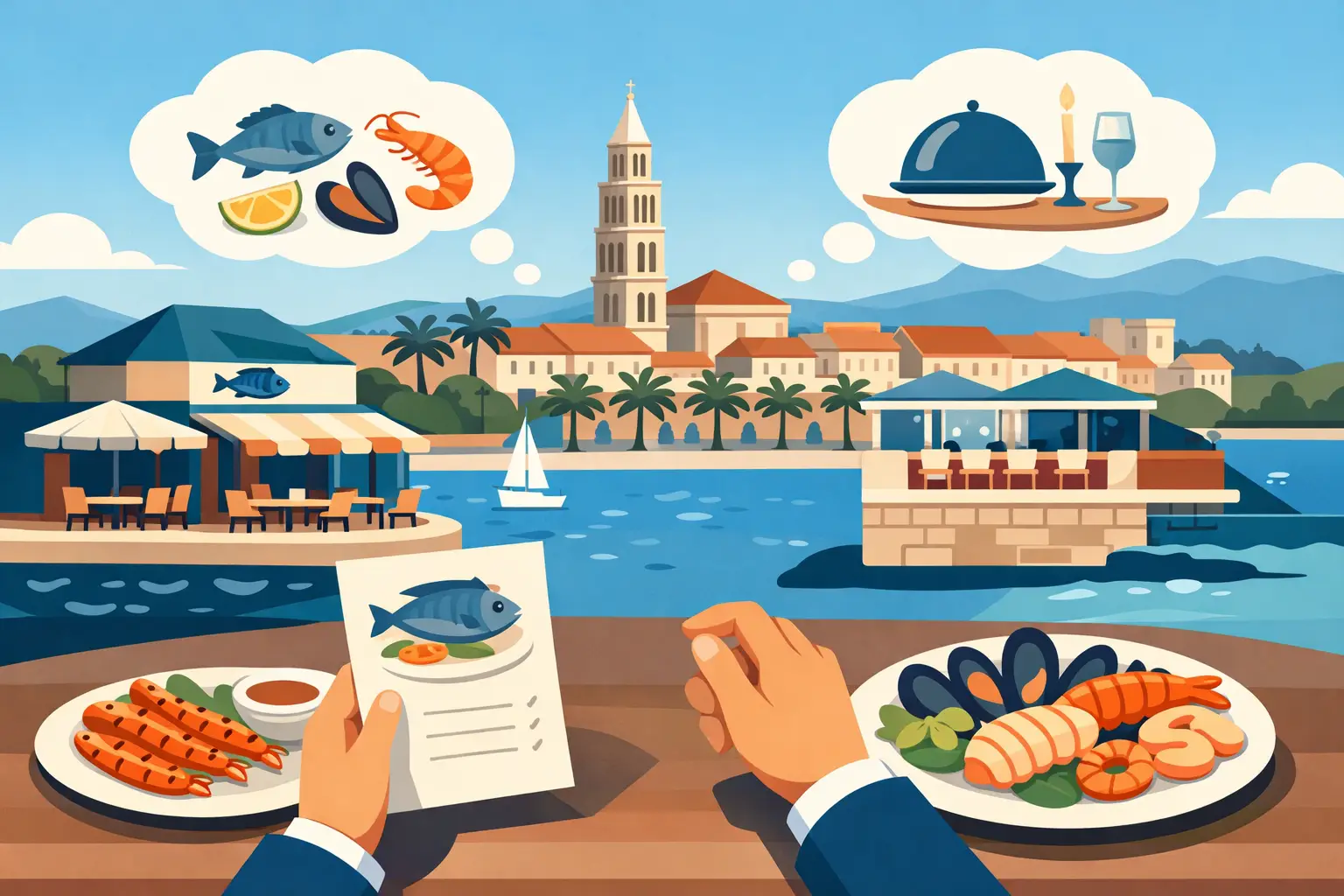
Split reveals itself most beautifully at the table: a polished glass catching the last light, the perfume of grilled fish rising from the kitchen, and ancient stone carrying the quiet rhythm of an evening well spent. An Adriatic seafood restaurant in Split should offer more than a plate of fish. It should express the city’s essential character – Roman grandeur softened by salt air, Dalmatian generosity, and the season’s finest catch.
For travelers who choose Split for both culture and coastal pleasure, seafood dining is not merely a meal between visits to Diocletian’s Palace and the waterfront. It is an occasion. The best experiences bring the Adriatic close, with thoughtful ingredients, confident preparation, attentive service, and enough time to savor every detail.
What Defines an Adriatic Seafood Restaurant in Split?
The Adriatic is not a single flavor. Its waters provide delicate white fish, sweet shellfish, octopus with a gentle richness, and small blue fish whose character becomes extraordinary when treated simply. In Split, a restaurant worth remembering lets that distinction lead the menu rather than masking it beneath heavy sauces or unnecessary ornament.
Look first for seasonality. A menu that changes with the market is generally a promising sign, whether the kitchen is serving branzino, sea bream, red scorpionfish, squid, langoustines, mussels, or shrimp. The day’s catch may determine the most compelling choice, and a gracious server should be pleased to explain what has arrived, where it was sourced, and how it is best prepared.
Freshness matters, but so does restraint. Fine Adriatic cooking often relies on olive oil, lemon, garlic, parsley, local herbs, and the clean heat of a grill. Those elements are not modest substitutes for technique. They are the foundation of a cuisine that respects exceptional ingredients. A beautifully grilled whole fish, finished with olive oil and served at precisely the right moment, can be as refined as any elaborate tasting course.
Begin With the Catch, Not the Menu Category
When selecting seafood in Split, it helps to ask a simple question: what is exceptional today? The answer may be a fish displayed by weight, a shellfish special, or a quietly listed dish the kitchen prepares only when the market allows. This approach can feel more spontaneous than choosing a familiar entrée, yet it often leads to the most authentic experience.
Whole fish is a particularly rewarding choice for two guests. It arrives with presence, encourages an unhurried pace, and makes a shared meal feel intimate without becoming formal. Grilling is a classic preparation, while fish baked under a salt crust may offer a more ceremonial expression. In either case, ask whether the fish is priced by weight and request an approximate total before ordering. In a premium dining room, such clarity is part of good hospitality.
For a lighter lunch, grilled calamari, marinated anchovies, mussels in a fragrant broth, or a composed seafood salad can be ideal. At dinner, octopus prepared slowly beneath a traditional bell-shaped lid, seafood risotto, or a fuller fish course may better suit the occasion. There is no universal “best” order. A warm summer afternoon calls for a different rhythm than a candlelit meal after an evening concert or a stroll through the palace.
The Dalmatian Dishes Worth Knowing
A few regional preparations offer a useful introduction to the coast, especially for guests visiting Split for the first time. Brudet is a fish stew with deep, savory character, usually served with polenta. It can vary considerably from kitchen to kitchen, which is part of its appeal. A more elegant version may balance several fish varieties in a restrained tomato base, while a rustic rendition can be bolder and more intensely flavored.
Gregada, associated with the Dalmatian islands, is another classic fish stew, often gentler in profile and built around fish, potatoes, olive oil, and wine. It rewards diners who appreciate comfort expressed with finesse. Black risotto, colored by cuttlefish ink, offers a dramatic, silky alternative, though its briny depth is not for every palate.
Then there is peka, a slow-cooking method rather than one fixed recipe. Fish, octopus, or meat is cooked beneath an iron bell covered with embers, allowing the ingredients to become exceptionally tender alongside potatoes and vegetables. Because it takes time to prepare, peka frequently requires advance notice. If it is on your wish list, let the restaurant know when reserving your table.
Service Should Make the Evening Feel Effortless
A memorable seafood dinner depends as much on the room as on the sea. In central Split, the finest hospitality feels composed rather than stiff. There should be an ease to the welcome, knowledgeable guidance without pressure, and a natural understanding of when guests wish to linger over wine or move on to an evening in the historic center.
This is especially valuable when ordering whole fish or unfamiliar shellfish. A skilled team can advise on portion size, prepare or fillet fish at the table when appropriate, and suggest dishes that complement one another rather than compete. For couples, sharing a starter and a whole fish often creates a more relaxed progression than ordering several rich courses. Families may prefer a mixture of familiar grilled dishes and one regional specialty to share.
At Palazzo President, the spirit of refined Mediterranean hospitality extends naturally to the dining experience: considered flavors, warm attention, and a setting designed for moments that deserve to be remembered. The right restaurant should give visitors that same sense of being cared for, while leaving space for the pleasure of discovery.
Pairing Adriatic Seafood With Croatian Wine
Croatian wine deserves a place at this table. The country’s coastal vineyards produce whites with enough freshness for shellfish and grilled fish, while selected rosés and lighter reds can suit heartier preparations. A server’s recommendation is worth considering, particularly with less familiar local labels.
Pošip is a natural choice for many seafood dishes. It can bring ripe stone-fruit notes and a rounded texture while retaining the brightness needed for the sea. Grk, typically more mineral and structured, can be especially compelling with simply grilled fish. Malvazija Istarska is another versatile white, graceful with prawns, mussels, and delicate starters.
Red wine is not out of place, but it depends on the dish. A powerful red may overwhelm subtle white fish, while a lighter, well-balanced Plavac Mali can work with octopus, tuna, or deeply flavored stews. For those who prefer a celebratory opening, a glass of Croatian sparkling wine brings lift and elegance to oysters, shrimp, or a cool seafood crudo.
Timing Matters in Split’s Historic Center
During the height of summer, reservations are wise for any restaurant that takes its cooking and service seriously. A table around sunset offers a particularly lovely transition from the heat of the day to the gentler atmosphere of evening. Later seatings have their own charm, when the lanes around the palace begin to glow and soft music drifts through the city.
Outside peak season, Split becomes more intimate. The sea remains central to the menu, yet the pace is calmer and conversations with staff can feel more personal. Spring brings tender vegetables and a sense of renewal; autumn often suits richer preparations, longer lunches, and wine-led dinners. Winter travelers may find seafood stews and baked dishes especially appealing after a day among the city’s Roman stones.
Location also shapes the experience. A waterfront table offers movement and spectacle, while a dining room near the old town can feel more sheltered, polished, and romantic. Neither is inherently better. Choose the Riva for a lively view and people-watching; choose a more secluded setting when food, conversation, and atmosphere are the evening’s true focus.
A Few Details That Signal Quality
The most reliable restaurants make their standards visible in quiet ways. Fish is handled with confidence. The menu identifies local specialties without treating tradition as a costume. Staff can explain prices, preparations, and timing clearly. Olive oil tastes alive, bread arrives fresh, and vegetables are given as much care as the seafood itself.
Be wary of a menu trying to be everything at once, particularly when its seafood selection is vast but vague. A shorter offering shaped by the day’s market is often the more luxurious proposition. It may mean your first choice is unavailable, but that is a worthwhile trade-off for a kitchen cooking from real supply rather than a fixed script.
Leave room, if possible, for a final note of sweetness: a delicate pastry, citrus dessert, or a small glass of dessert wine. Then step back into Split slowly. The best Adriatic meal does not end when the plates are cleared. It follows you into the warm night, through palace passageways and toward the sea, as one more imperial memory made entirely your own.
 #palazzopresident